Plowed Roads, Blocked Access: Winter’s TDM Problem
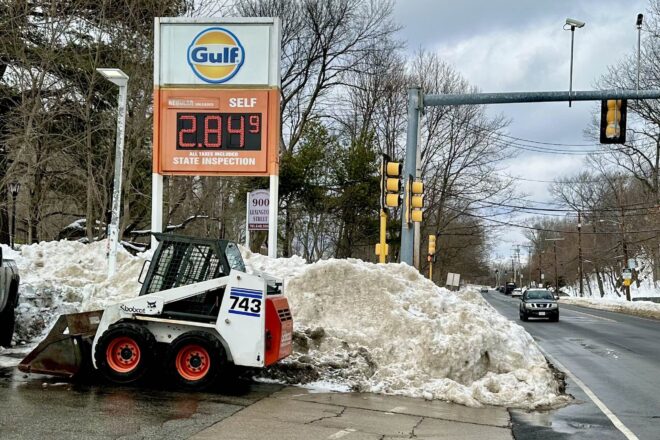
Late Sunday into Monday, a significant blizzard hit Massachusetts and much of southern New England. It dropped roughly 1-2 feet of snow around the Route 128 West Corridor, with higher totals elsewhere in the state.
At 128 Business Council, we never take shuttle service suspensions lightly. However, the storm was big enough that we had to suspend shuttle service on Monday—and then again on Tuesday. The second day of service suspension wasn’t about active precipitation. The snowfall had ended. The problem was the aftereffects: there simply wasn’t enough time, or enough physical room, to clear what needed clearing.
Snow continues to impact transportation even when the precipitation stops. When everyone’s priority is restoring vehicle traffic (including vehicles like The Grid shuttles), pedestrians and cyclists often get squeezed out.
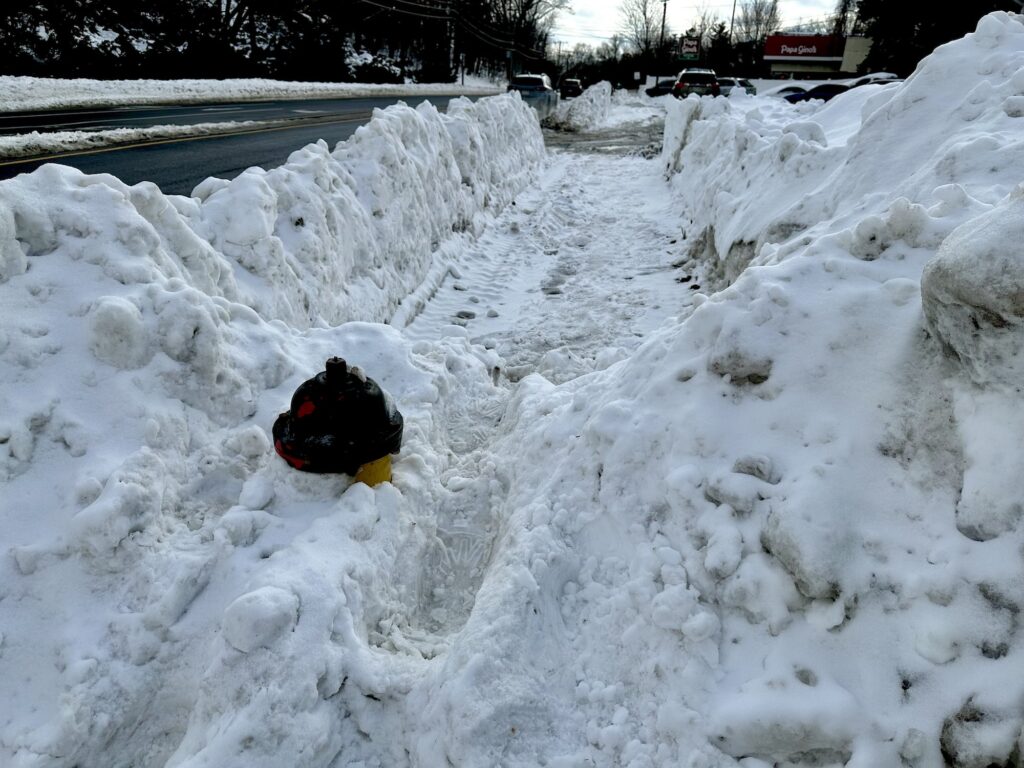
With sidewalks, curb ramps, shoulders, and bike lanes buried, intrepid non-motorists have nowhere to go except further into the roadway. Through a Transportation Demand Management (TDM) lens, this isn’t just a safety issue. It’s the issue. Because most non-single-occupancy-vehicle commutes aren’t one mode. They’re chains of modes.
Commute chains need walkways
Getting folks out of single-occupancy vehicles works best when people can effectively link together several different transportation modes. Maybe they walk to their train or bus stop. Maybe they bike one direction and take a shuttle back. Maybe the only available “first/last mile” option drops them a quarter mile from their office and they scooter the last bit to their building.
When sidewalks, bike lanes, and related infrastructure disappear, these TDM chains snap.
This winter, these broken links have been especially visible across Greater Boston. Earlier this month, well before this most recent storm, GBH reported that many Boston sidewalks were already blocked, despite the city issuing fines.
The GBH story also highlights a core coordination problem: it’s often unclear who is responsible for clearing key pedestrian access points like bus stops. And that lack of clarity becomes a recipe for unreliable access. One pedestrian advocate and transit user reportedly took the matter into his own hands by bringing a shovel on family commutes to cut a path so riders wouldn’t have to stand in the street—only for plows to undo his work the next day.
That’s the TDM problem in miniature: even when the buses are running, the system still fails if the access network around that system is inconsistent and weighted toward the needs of drivers.
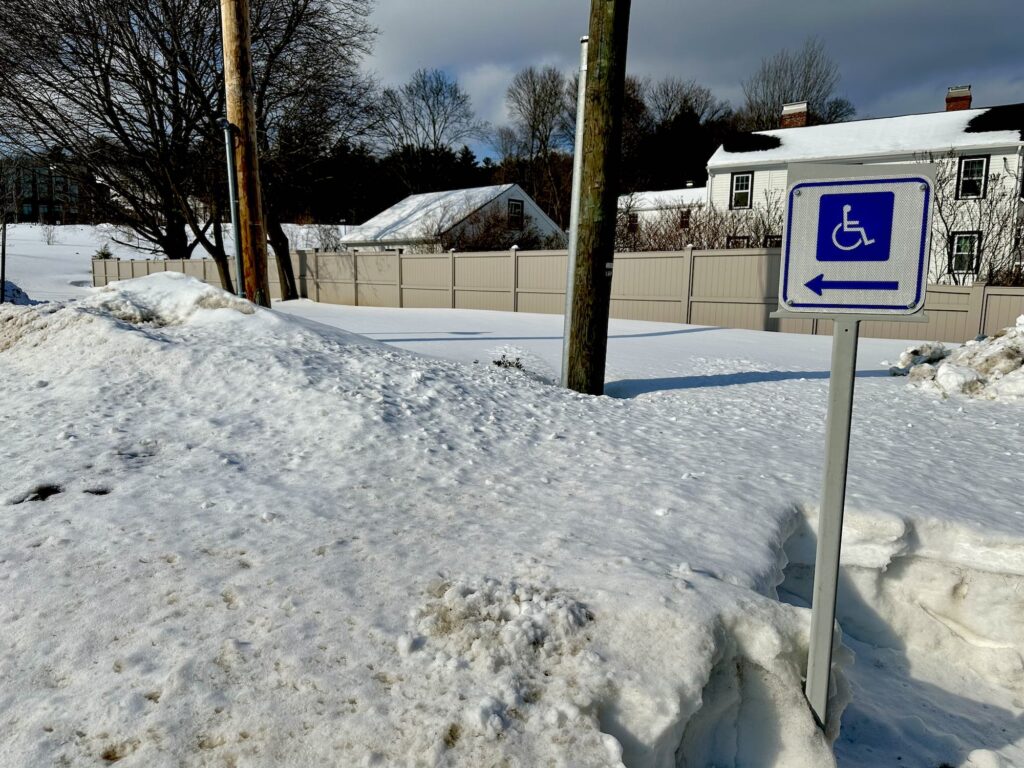
Accessibility can’t be seasonal
When snow blocks walkways, it doesn’t inconvenience everyone equally. Older adults, people with disabilities, parents with strollers… Not everyone can simply “step over” a snowbank or detour into a busy street. GBH quoted a legally blind Boston resident who reported facing snow piles so massive and pedestrian walkways so narrow that the only safe option was to stay home.
A February crash in Wareham made the consequences brutally clear. A 57-year-old woman using a walker was struck and killed while walking along the edge of the roadway. (Another pedestrian was also injured in the same incident.) The sidewalk was covered in snow, forcing the pedestrians into the street.
A Streetsblog Massachusetts guest column clarified that this incident occurred six full days after the end of January 26th’s megastorm, declaring: “It’s a miracle that we haven’t had more casualties.” Crashes are a predictable outcome of treating sidewalk clearing as optional.
Snow-blocked bike lanes create a similar safety problem for cyclists. Protected lanes often aren’t treated as a priority for clearing—and sometimes they’re treated as convenient storage when plows need somewhere to push the overflow. Either way, riders get forced into mixed traffic.
If we’re serious about safety and serious about preserving commute options, then sidewalks, bike lanes, and accessible crossings can’t be treated as season-dependent. They have to be treated as core infrastructure.
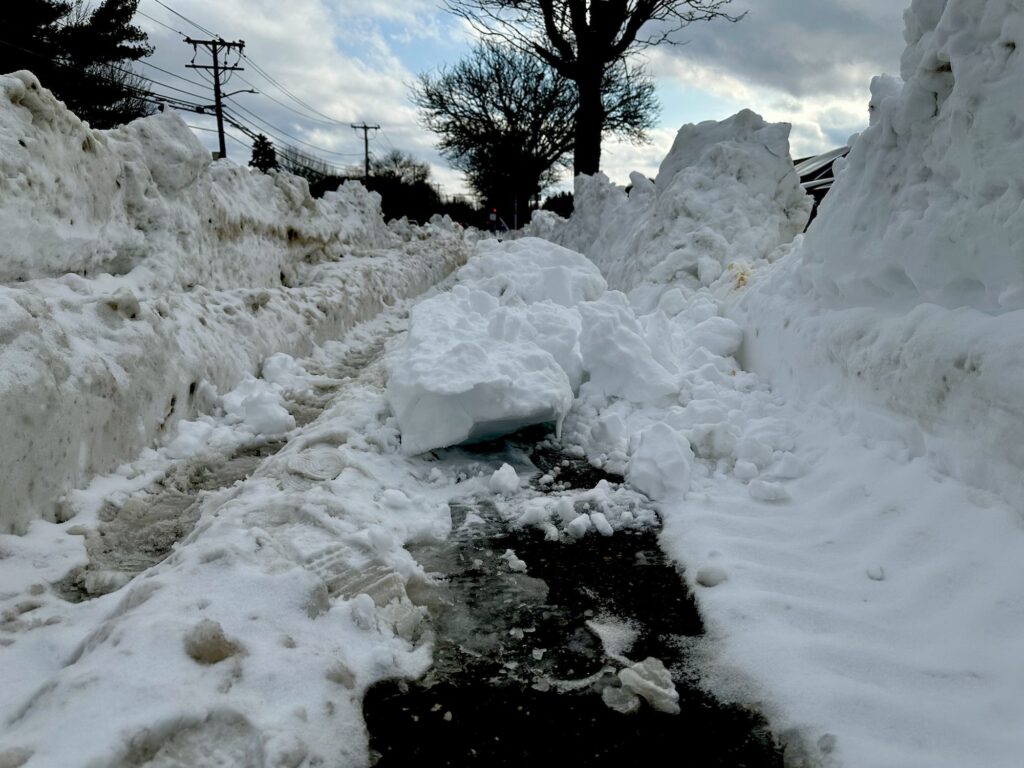
People improvise when cities don’t
When sidewalks and bike lanes aren’t cleared quickly, people don’t just complain. They improvise.
Streetsblog Massachusetts reported that Boston riders have been hauling their bikes over giant snowbanks and, at times, riding in car travel lanes when bike infrastructure is blocked. In response, the Boston Cyclists Union organized volunteers to help clear key bike connections themselves.
A Boston Globe opinion piece highlighted another community workaround to ensure basic access: Somerville’s teen snow-shoveling program, which matches teens with older adults and residents with disabilities who need help keeping sidewalks passable.
Both efforts are heartening. They’re also a reminder that when the access network isn’t reliable, the burden quietly shifts to residents to patch the gaps.
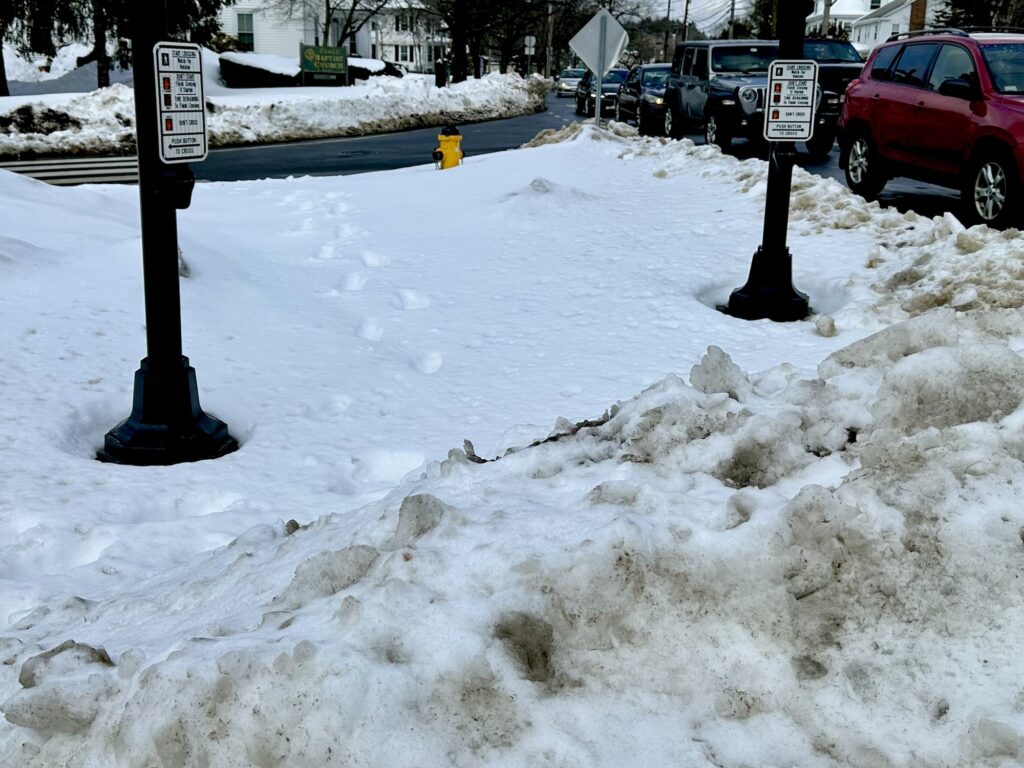
When we talk about winter storms, we tend to focus on whether roads are drivable. But from both a TDM and accessibility perspective, the critical question is broader: Is the transportation network usable, end to end, for everyone who needs it?
If sidewalks, crossings, shoulders, and bike lanes are buried, we don’t just lose comfort. We lose options. And when commute options shrink, congestion grows.