Beyond the “Alewife Money Pit”: What Comes After Park-and-Ride?
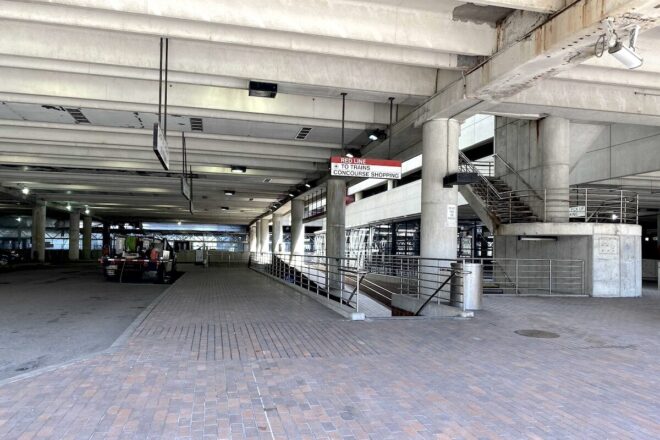
For decades, the Alewife garage defined the station’s expected role at the northern end of the Red Line. Drivers from Arlington, Lexington, Bedford, and far beyond could leave their cars at Alewife and continue into Cambridge or Boston by transit. That model no longer works as well as it once did.
Streetsblog Massachusetts recently made a compelling case that the MBTA should rethink the enormous and aging Alewife garage in its article, “The T Is Throwing More Money Into the Alewife Money Pit.” Parking use has fallen, and the structure needs expensive repairs. Keeping the garage on life support carries an enormous financial burden. That burden is hard to justify when the garage sits atop valuable land that could support much-needed housing.
But the debate over Alewife’s future is not only about what to do with an aging garage. It is also part of a much older question about what role Alewife should play in the regional transit network. An October 9 Boston Globe story provides some of that history. In the 1970s, planners considered extending the Red Line through Arlington, with options reaching as far as Route 128 in Lexington. Arlington voters rejected every option in a 1977 nonbinding referendum. A 1980 state law later stopped further study without legislative approval. The Red Line instead ended at Alewife when the station opened in 1985.
That history helps explain the challenge we face today. Alewife definitely needs to evolve beyond its current identity as a giant park-and-ride facility. But what should replace all that parking? And how can redevelopment strengthen, rather than shrink, Alewife’s role in supporting non-SOV travel? The Route 128 West corridor needs an effective transit hub—one that gives people more ways to reach the Red Line without driving alone.
Alewife garage is currently a bad investment.
Streetsblog describes an increasingly hard-to-defend investment. The MBTA budgeted $45 million for the current Alewife garage repair contract. The contract began in 2018 and is expected to continue through 2027. The MBTA has also tentatively budgeted another $30 million to keep the garage functioning for roughly another decade while it develops a longer-term plan.
At the same time, parking demand has fallen. The T has already explored a very different future for the site. In 2024, it sought a private development partner to demolish the garage and replace it with transit-oriented development that could include thousands of new homes. The agency cancelled that process in early 2026 after deciding that market conditions were not favorable.
That leaves the MBTA with a difficult choice. It can keep dumping money into an aging parking structure. Or it can move toward replacing that structure with something more productive.
But deciding what to do with the garage is only part of the problem. We also have to decide how people will reach Alewife if parking plays a smaller role.
The garage and the station are not the same thing.
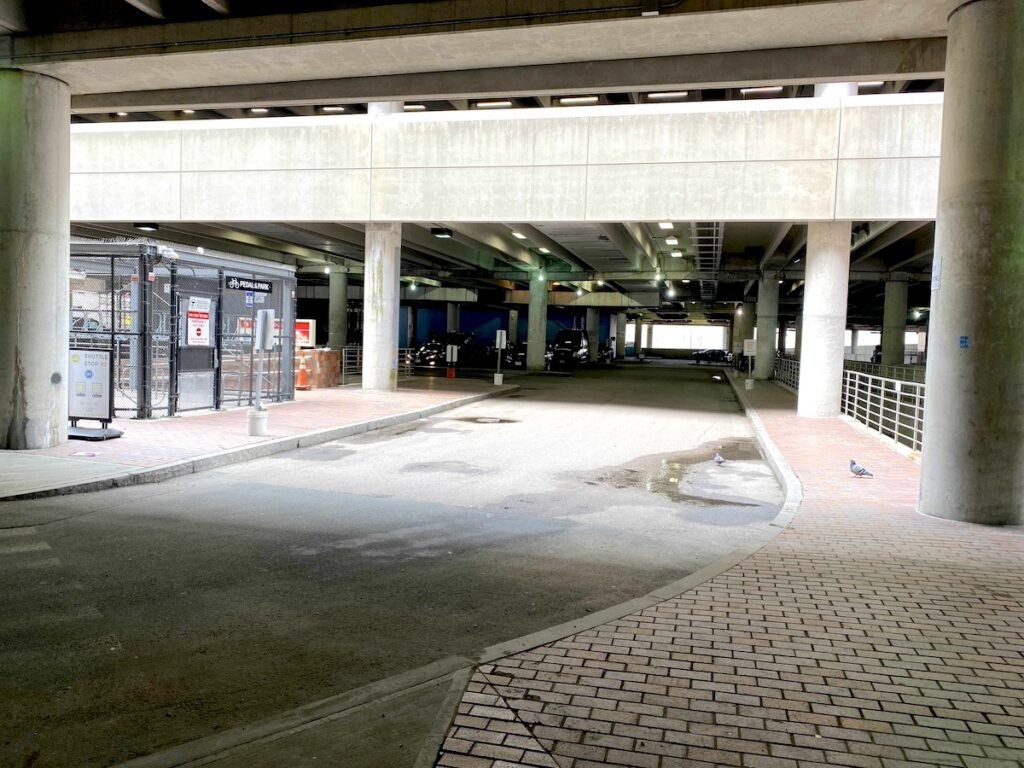
Alewife serves as a major regional transfer point. People reach it by bus, shuttle, bicycle, on foot, or via drop-off. Others drive and park.
Streetsblog’s own infographic makes that point clearly. Using MBTA access data from 2022–2023, it estimates that on a typical day, 1,678 passengers arrived by driving and parking. Another 1,822 walked, 923 arrived by MBTA bus, 364 arrived by bicycle, 362 arrived via drop-off, and 228 arrived by shuttle. That means park-and-ride accounted for only about one-third of the station’s Red Line riders.
Parking is only one part of the station’s access network. Reducing parking at Alewife should not mean reducing Alewife’s importance. In fact, a future with less parking will require the station to work even better as a multimodal hub.
The Grid’s ridership shows how important that multimodal role already is.
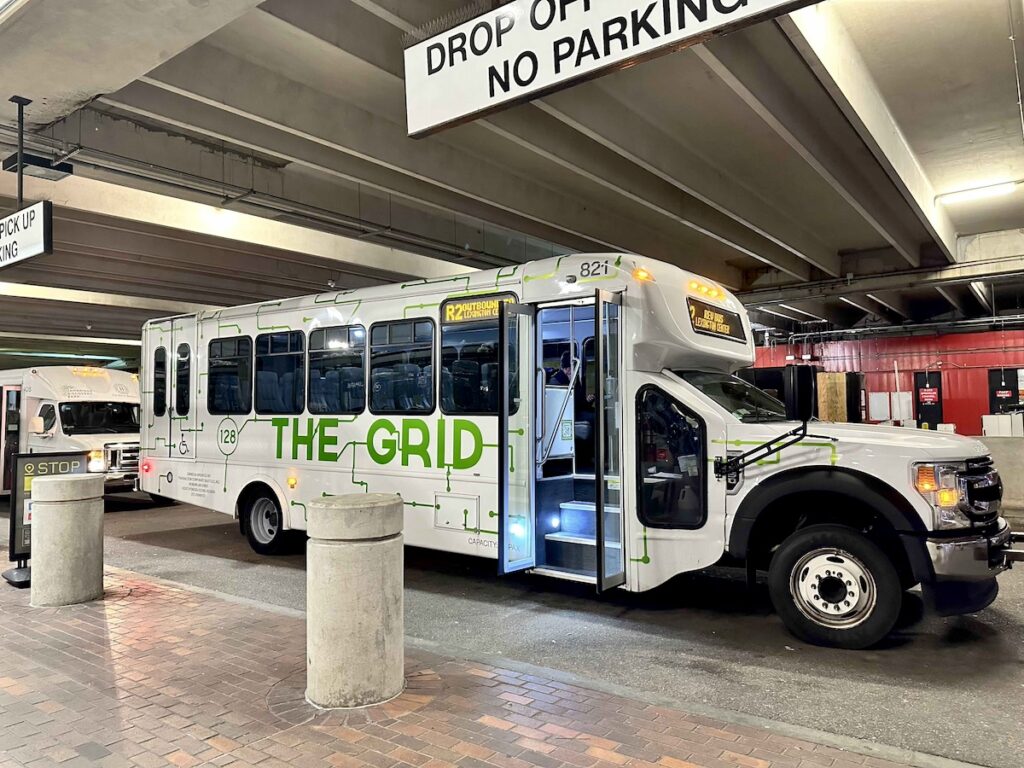
Alewife is the main hub for The Grid services.
For 128 Business Council, Alewife is not simply one stop among many. It is the primary connection between The Grid and the MBTA rapid-transit system. The Grid provides a public connection between the Red Line and destinations throughout Route 128 West.
In 2025, Grid riders made 131,475 trips to or from Alewife Station. Those trips accounted for 80 percent of all Grid ridership across our entire system. From January through August 2026, riders made another 91,777 Grid trips to or from Alewife.
The future of Alewife is therefore directly relevant to the future of regional transportation in the Route 128 West corridor.
Those numbers also make Streetsblog’s shuttle estimate worth a closer look. Its infographic estimates 228 daily “shuttle offs” based on 2022–2023 data. The Grid’s more recent data suggests that shuttle activity now plays an even larger role. In 2025, The Grid alone averaged more than 260 shuttle drop-offs at Alewife per service day. That does not include any other residential, employer, or institutional shuttles serving the station.
Taken together, these numbers shift the question. The issue is not simply how much parking Alewife needs. It is how people will reach the station as parking becomes less central.
Less parking should mean more transit access.
A decline in parking demand does not necessarily mean that fewer people need to connect with the Red Line. Many things can reduce garage use. Some people commute fewer days each week or have shifted their travel times. Others may have changed modes. Transit reliability also matters, as does the availability of feeder service.
We should therefore be careful about the conclusion we draw from an emptier garage. The wrong conclusion would be: Fewer people are parking at Alewife, so the region needs less transportation capacity there.
A better conclusion is: Fewer people are parking at Alewife, so we have an opportunity to replace an expensive and land-intensive access mode with better non-SOV options.
That means stronger bus service and shuttles. It also means safe bicycle and pedestrian connections and reliable rapid transit. If we remove parking without improving those alternatives, we risk shrinking Alewife’s reach instead of simply changing how people reach it.
Alewife serves a much larger region.
That reach extends far beyond Cambridge’s immediate neighbors. Alewife serves a wide swath of the west and northwest suburbs, including Arlington, Belmont, Waltham, Lexington, Bedford, Burlington, Winchester, Woburn, and Billerica. Those communities have uneven access to rail and rapid transit.
A successful plan for Alewife therefore needs to combine an appropriate amount of park-and-ride capacity with much stronger feeder transit. We should not assume one can disappear without the other.
The challenge is especially important because Alewife’s feeder network is already weaker than it once was.
Alewife has already lost feeder connections.
Before the pandemic, Alewife had a broader network of direct MBTA feeder buses. Several routes connected surrounding communities directly to the Red Line. Some of those connections have disappeared.
Routes 79 and 84 once provided direct service between Arlington and Alewife. The MBTA suspended Route 79 in March 2021 and Route 84 in March 2022. The agency later confirmed that neither route would return.
Not every recent change has moved in the wrong direction. The MBTA separated Routes 62 and 76 again in 2025. It also increased peak service and restored additional weekend service, including Sunday service.
Those improvements matter. But they do not change the fact that Alewife’s feeder network has declined in important ways. A more frequent bus on one route cannot replace a direct connection that disappeared somewhere else.
The Red Line has also made Alewife connections harder to trust.
For several years, Red Line riders have dealt with slow zones, infrastructure problems, construction, and repeated partial shutdowns.
Much of that work has been necessary. The MBTA needs to replace aging track, signals, and other infrastructure. Those investments should produce a more reliable Red Line in the long term. But rebuilding can carry a ridership cost.
Feeder availability and Red Line reliability reinforce each other. Less reliable rapid-transit service can weaken demand for feeder buses and shuttles. When feeder connections shrink, fewer people have a practical way to reach the Red Line. Over time, those two trends could erode Alewife’s regional role from both directions.
These problems point toward a different way to think about Alewife redevelopment. The goal should not simply be to replace an obsolete garage. It should be to build a stronger regional transportation hub.
Alewife should leave room for new regional connections.
Recent proposals show renewed interest in strengthening Alewife’s regional connections. The Boston Globe reports that Arlington’s representatives secured a $50,000 earmark in the state’s fiscal 2027 budget to study Red Line and/or bus rapid transit options. They also filed legislation in September that would repeal the 1980 law that halted further study of a Red Line extension. The MBTA does not currently include such an extension in its long-range planning, so any new Red Line service remains a long-term possibility.
Other potential connections are already receiving attention. An MBTA study of a possible Alewife commuter rail stop on the Fitchburg Line estimated 800 to 1,200 daily boardings. The analysis also considered tradeoffs, including added travel time, operating costs, and impacts on existing Fitchburg Line riders.
Whether any of these projects moves forward, Alewife redevelopment should make future regional connections easier, rather than designing the next Alewife around a smaller role. New bus and shuttle connections could also strengthen the station’s role as a gateway between Cambridge and Boston and communities along and beyond Route 128 West.
The station itself also needs to work better.
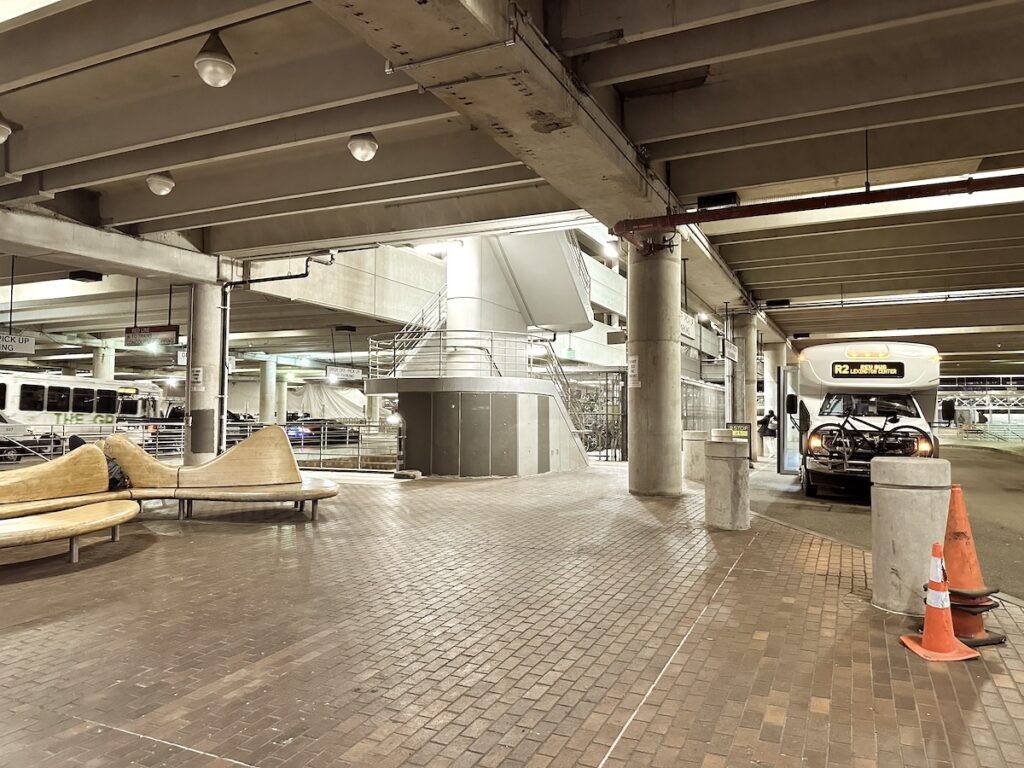
Improvements do not all have to wait for garage redevelopment nor regional expansion. The current station needs safer, more comfortable, and more functional space for people transferring among MBTA buses, The Grid and other shuttles, bicycles, and the Red Line.
Better waiting areas, passenger circulation, and pickup and drop-off facilities would improve the rider experience. They would also reduce operational challenges for shuttle providers.
Those near-term improvements and longer-term connections should serve the same goal: strengthening Alewife as a regional transportation hub.
Build the Alewife we need next.
Alewife does not need to remain frozen in the transportation model of 1985. Replacing the garage could create room for housing, development, public space, and other uses. Those uses could bring far more value to land next to rapid transit.
But a successful transition requires more than replacing parking with development. If park-and-ride capacity declines, other connections need to grow.
We need more and better feeder buses, publicly accessible shuttles like The Grid, and strong public-private partnerships. We also need safe and direct bicycle and pedestrian connections, easy transfers, better facilities for riders and shuttle operators, and, above all, reliable Red Line service. Future planning should also preserve opportunities for new regional connections as travel patterns continue to change.
For The Grid, the stakes are clear. In 2025, roughly eight out of every ten Grid rides began or ended at Alewife. The garage may have outlived the role it once played. Hopefully, Alewife Station has not.