A Shared Agenda for the Route 128 West Corridor
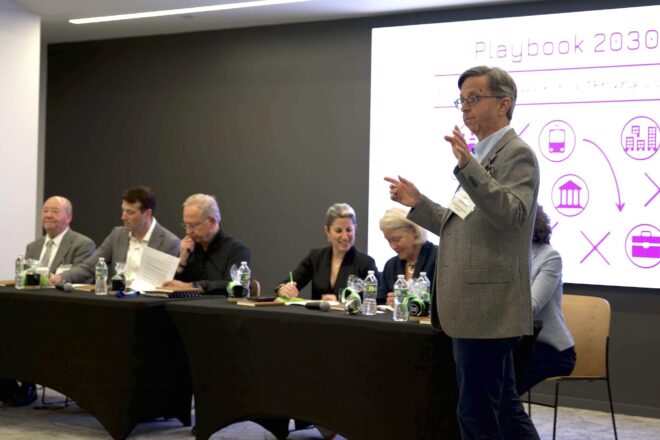
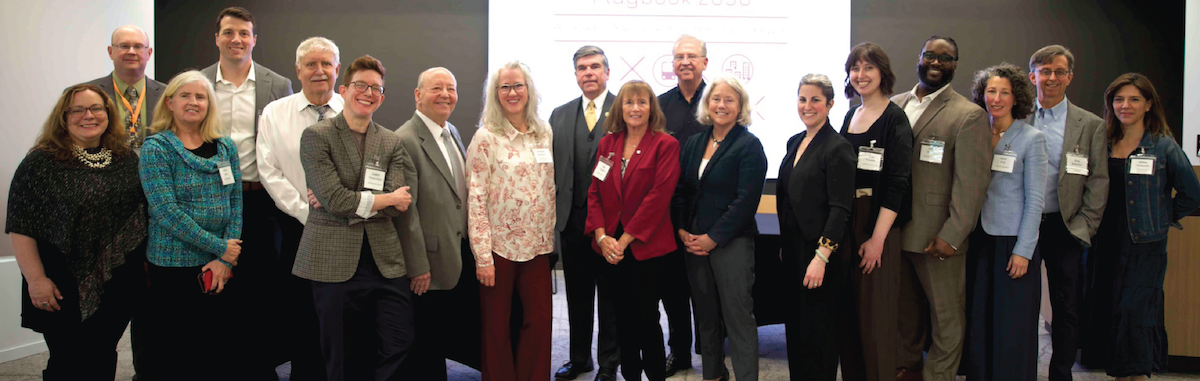
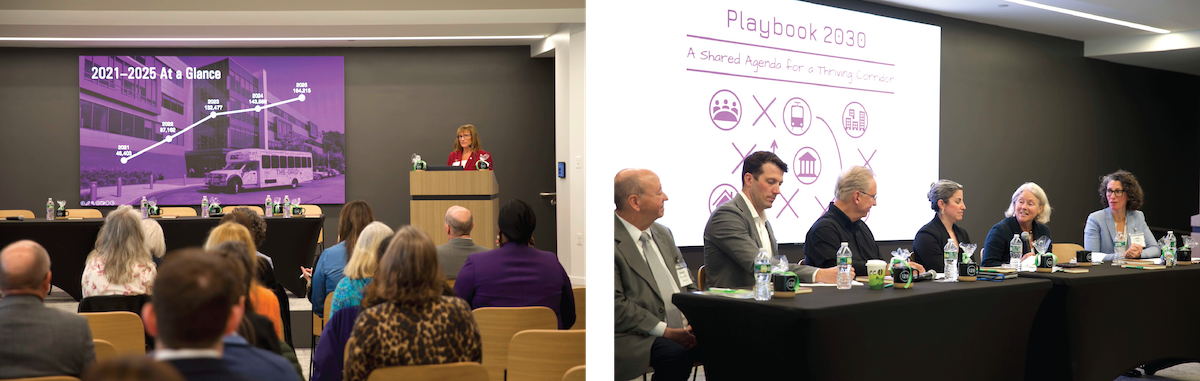
At 128 Business Council’s 2026 Annual Meeting, 73 registered attendees gathered at The Quarry in Weston for a frank conversation about the future of the Route 128 West Corridor. We are grateful to BXP for donating the use of this beautiful space, which provided a fitting setting for a panel focused on what it will take for our communities, companies, and commercial centers to thrive by 2030.
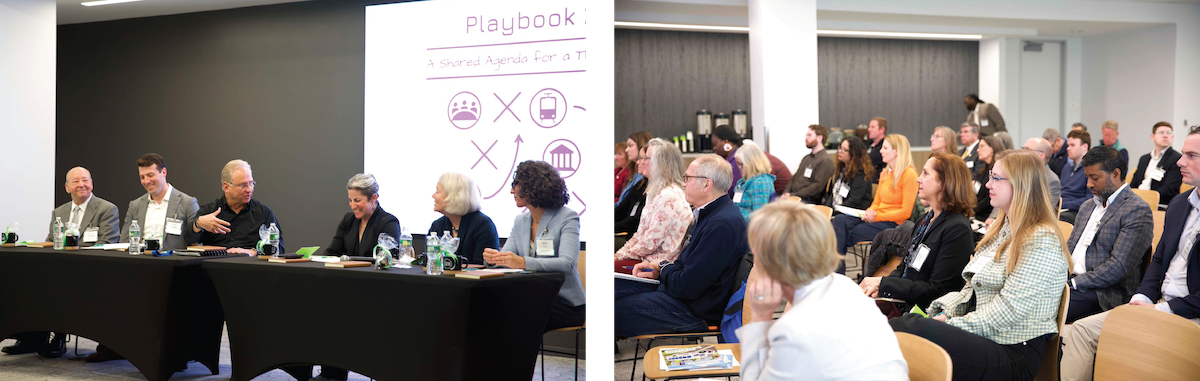
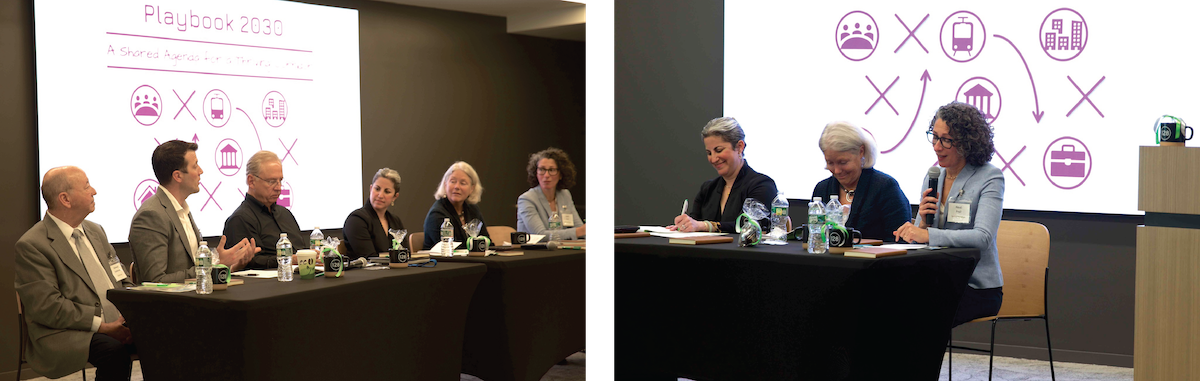
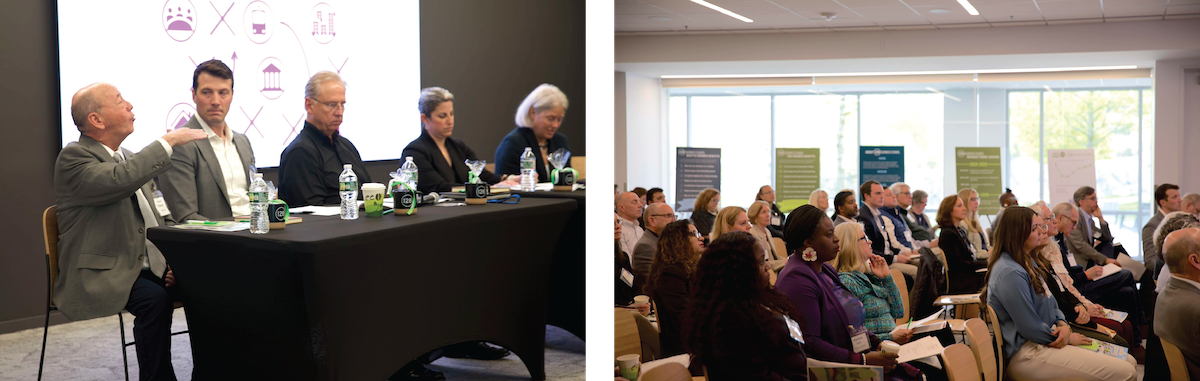
The panel, Playbook 2030: A Shared Agenda for a Thriving Corridor, was moderated by Greg Reibman, President & CEO of the Charles River Regional Chamber and a longtime convener of civic and business leaders. MAPC‘s Executive Director Lizzi Weyant offered a region-wide view of housing, transportation, climate, and municipal capacity. Jody Hoffer Gittell, a professor at Brandeis University’s Heller School and expert in relational coordination, gave the group a framework for understanding how interdependent partners work together. Needham Select Board Chair Heidi Frail spoke from direct municipal experience with housing, zoning, and MBTA Communities planning. BXP’s Bryan Koop and Keir Evans added both a portfolio-wide and project-level view of development, competitiveness, and mixed-use investment. Finally, Howard Goldman of KabaFusion rounded out the panel with an employer’s perspective on workforce needs, commuting realities, and operational logistics.
The conversation asked questions every employer, property owner, municipal leader, and civic partner in the corridor should be asking. How would you define “thriving” for your company or community? What obstacles already stand in the way of that vision—from housing costs and long commutes to permitting delays, traffic concerns, infrastructure limits, climate pressures, and strained public discourse? And which of those obstacles can you not overcome alone?
Thriving requires seeing the corridor as an ecosystem.
One of the clearest themes of the panel was that the corridor is not a set of isolated communities or individual worksites. It is an ecosystem. Housing, transportation, employers, municipalities, residents, infrastructure, and public policy all shape one another.
Jody, Heidi, and Lizzi all described the region as a highly interdependent system, where any one constraint can hold back the whole. No single actor can see the entire system alone. That is why shared goals, mutual respect, and problem-solving communication matter.
That theme echoed throughout the morning. The problems facing the corridor do not stop at a property line, a municipal border, nor the edge of a single employer’s campus. Neither can the solutions.
Work-life balance is an economic development issue.
Howard brought the employer perspective into sharp focus. Many KabaFusion employees cannot afford to live near the Route 128 belt and instead commute from southern New Hampshire, central Massachusetts, or south of Boston. For those workers, the workday does not end when they leave the office. It ends when they finally walk through their front door.
That matters for recruitment. It matters for retention. It matters for quality of life. And as Howard noted, remote work is not a universal solution. In KabaFusion’s case, HIPAA compliance create an inflexible need for employees to be in the office.
Heidi made a similar point from the municipal perspective. The remote work revolution cannot apply to many working in clinical care, trades, construction, engineering, development, and many essential services that require people to be physically present. If communities cannot provide housing that supports reasonable commutes, they will feel the consequences in their workforce and their local economies.
Housing solutions have to fit local realities.
Even when communities share similar goals, the right development solutions can look different from town to town. Keir noted that development is not only about adding households and square footage; it is also about matching investment to local needs. In Waltham, the need may be traffic infrastructure. In Lexington, it may be street-front retail. In Weston, it may be a particular housing mix that reflects the town’s vision for community life.
Lizzi was direct about the role planning boards can play in every town or city, regardless of municipality-specific needs: reduce the procedural friction that keeps good projects from moving forward. Local permitting needs to be easier, faster, and more predictable, with fewer hoops between a viable proposal and an approved project. She also emphasized that inclusionary zoning remains an important way for cities and towns to create affordable housing, but it has to be responsive to the market. If requirements go so far that projects no longer pencil out, the result is not more affordable housing. It is no housing at all.
Housing and transportation have to move together.
The panel repeatedly returned to a tricky chicken-and-egg problem. Communities worry that adding housing without transportation will add more cars to already strained roads. But transportation service can be difficult to fund, justify, or sustain before there are enough people and destinations to use it. The ideal solution is not to wait for one piece to come first. It is to plan for housing and transportation together.
Lizzi added another layer to that challenge: housing decisions are made locally, while transportation needs to be planned regionally. Keir made a related point from the development side, noting that many traffic and transportation improvements are too large for any single developer or property owner to handle alone. Even when the need is local, the solution may require coordination across municipalities, property owners, employers, and the state.
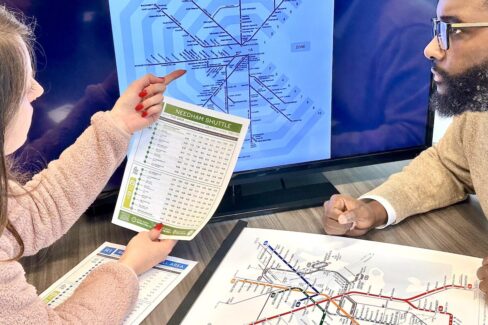
That is where Transportation Management Associations and cooperative transportation systems like The Grid can help. They bridge municipal boundaries and organize regional solutions around local demand zones. But MBTA Communities zoning also complicates that model. Because MBTA Communities-related housing is by-right, municipalities have less ability to require transportation mitigation as part of the approval process.
That matters when new housing is not already on or near strong transit. Communities may know that new mobility options are needed, but have fewer tools to fund them through the development process itself. The result is another version of the same shared challenge: If housing, transportation, and infrastructure are planned separately, each one becomes harder to deliver well.
Traffic is both real and emotional.
Multiple panelists named increasing traffic congestion as one of the biggest local impediments to thriving. But Heidi pushed the group to think beyond new development as the sole cause of this increase. Compared to past decades, modern Boston-area families own more cars, drive children to more activities, and feel less comfortable letting kids walk or bike independently. New traffic is not only caused by new people. It is also produced by how existing communities have changed.
The panel also drew a useful distinction between traffic itself and the fear of traffic. Traffic concerns often carry broader anxieties: Will daily life become harder? Will children be safe? Will change make the community feel less manageable? Lizzi noted that transportation debates often center personal experience even when the broader data tells a more complicated story.
That led to a broader question: How do we shift from moving more cars to moving more people? Bryan argued that planners and policymakers need to pay close attention to real behavior and shifting data trends. At the same time, the discussion pointed toward an important caution: effective transportation systems are not built only around the highest-volume trips. Sometimes lower-volume connections are exactly what allow people to own fewer cars in the first place.
Fractured discourse makes progress harder.
The panel was frank about the difficulty of public conversation right now. Bryan described the challenge of trying to move projects forward in a moment when everyone seems to have their own set of facts. That breakdown matters because the corridor’s biggest challenges depend on trust, long-term planning, and the willingness to solve problems across municipal and organizational lines.
Jody pointed to relational mapping, a method she has developed through her work at the nexus of academic research and practical application, as one way to rebuild that problem-solving capacity. Relational mapping helps people see the system as a whole, visualize how different players are connected, and become more curious about one another’s perspectives. The goal is to move beyond each party’s individual concerns toward shared goals and shared knowledge.
The future depends on choices made now.
When Greg asked the panelists to name the challenges they were watching most closely, Lizzi pointed to the long lag between today’s decisions and tomorrow’s results. Climate resilience, housing, transportation, and economic growth all require investments whose full value may not be visible for decades.
Heidi focused on the need to build the community consensus necessary to prevent long-term plans from being derailed by shifting politics. Projects take years to develop, and their full impacts can take even longer to manifest. That makes continuity essential. She urged communities to begin by naming the outcomes they want: children who can walk or bike more independently, workers who can live closer to their jobs, and neighborhoods that meet more daily needs close to home.
Bryan raised another long-term constraint: whether the region’s infrastructure can support the future it wants to build. He pointed especially to the power grid, noting that the knowledge economy and clean-energy goals both depend on reliable electricity. Still, the panelists also pointed to reasons for optimism, including public-private partnerships already taking shape in Waltham, Lexington, and Cambridge.
The panel modeled the coordination the corridor needs.
The premise of Playbook 2030 was that the corridor’s biggest challenges will not respect municipal, organizational, or property boundaries. The panel made that clear in practical terms: housing decisions happen locally, transportation needs to be planned regionally, infrastructure improvements often require multiple public and private partners, and employers cannot solve long commutes on their own.
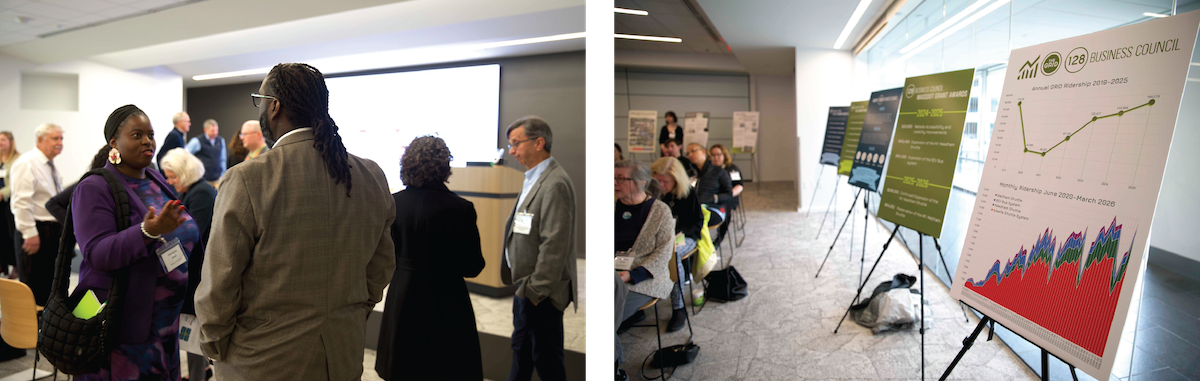
That is why the event itself mattered. The Annual Meeting brought together employers, developers, planners, municipal leaders, transportation advocates, and civic partners who see different parts of the same system. Thriving by 2030 will not come from one policy, one project, one municipality, or one company. It will depend on building enough shared understanding to act on a shared agenda.